Manitoba’s 1970 summer of outdoor music
festivals began on May 24 with the
Niverville Pop Festival, which transformed
from a friendly hippie fest into a
colossal mud bath after torrential rain
disrupted the event. So it seemed sadly
fitting the concluding summer event,
Man-Pop, would suffer a similar fate. But
unlike the Niverville event, Man-Pop
continued indoors thanks to quick thinking
and a team effort.
What resulted 45 years ago has become the
stuff of legend.
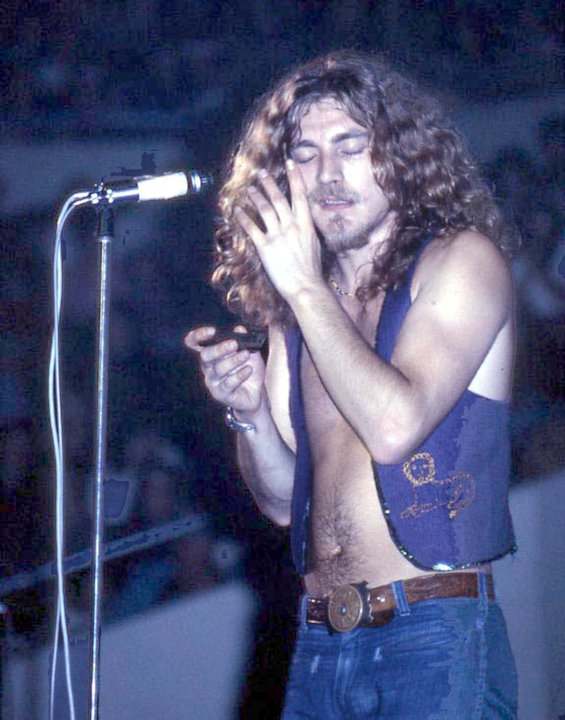
Man-Pop — the only rock festival sponsored
by the provincial government — was held on
Saturday, Aug. 29, 1970. What began as an
outdoor concert at the Winnipeg Stadium
finished more than 15 hours later inside
the Winnipeg Arena with one of the most
memorable shows ever to grace a local
stage, even a makeshift one. Chances are
many of you reading this were among the
14,000 or so who attended the event.
Intended as the last of the major events
marking Manitoba’s centennial year,
Man-Pop boasted a 13-act roster that
included many of the best-known local
bands, plus hard-rock heavyweights Iron
Butterfly and Led Zeppelin. Six months
earlier, Centennial Corp. chairman, former
provincial cabinet minister and respected
businessman Maitland Steinkopf had
solicited suggestions for headliners from
the public.
Ballots were printed in the Free Press and
Winnipeg Tribune to be mailed in. With
chart-topping albums at the time, Zeppelin
and Iron Butterfly were a shoo-in as fan
favourites, and the Youngbloods and Ides
of March were also booked. The Rolling
Stones placed fourth, while Crosby,
Stills, Nash & Young finished 10th in
the voting. (Three Dog Night ranked second
but was unavailable.)
Initially, Steinkopf proposed a two-day
event at Birds Hill Provincial Park,
issuing an invitation to ex-Beatle John
Lennon to attend as guest of honour. With
controversy swirling around his Two
Virgins nude album cover, Lennon’s people
politely declined.
The festival was scaled down to a one-day
affair with a budget of $130,000. Tickets
were $5.50 in advance, $6.50 at the gate.
The Centennial Corp. was not expecting to
turn a profit but indicated the projected
loss was manageable within their overall
budget. Local booking agent Frank Wiener
of the Hungry I agency was tasked with
securing the local talent, while
impresario Jerry Shore looked after the
big-name acts.
On the morning of the concert, the sun
shone brightly as thousands of young
people began filling the football field.
Steinkopf took to the stage around noon,
declaring Man-Pop open with the words,
“We’ll show those squares in government.”
The first half-dozen acts were local
groups, with Euphoria (featuring yours
truly) kicking it off. I clearly remember
standing onstage and facing my Garnet
amplifier when we were introduced, turning
around and looking out over the largest
crowd I had ever set eyes upon. It was my
very own Woodstock moment, and local
photographer Gerry Kopelow captured the
stunned look on my face.
We were received with polite applause.
Haymarket Riot followed with the next set,
as the crowd continued growing. Justin
Tyme, boasting a new lineup, and Next
(formerly the Fifth, and featuring future
Harlequin frontman George Belanger) were
next, followed by pub favourites Dianne
Heatherington & the Merry-Go-Round.
Tribune reporter John Forsythe, writing of
the event in Monday’s newspaper, wrote,
“The stadium had a picnic-like atmosphere
in the warm 70-degree temperature Saturday
morning. Thousands sprawled in front of
the stage at the south end of the field
and gulped beer, wine and other more
potent beverages. There were several
announcements warning that a poor quality
‘white lightning’ (LSD) was being
circulated, but drug-taking was
unobtrusive. In the clear spaces at the
north end of the field, groups of
teenagers played catch with footballs and
Frisbees (toy flying saucers).”
A light sprinkle during Sugar &
Spice’s mid-afternoon set failed to deter
proceedings.
“Sue-On and I went
across to the Polo Park mall and
purchased plastic drop sheets
that we wrapped ourselves in as
we sat on the turf near the
stage,” recalls Bill Hillman.
— married
musical duo Bill and Sue-On
Hillman had an idea for keeping
dry.
|
It wasn't until around 5 p.m. and
Chilliwack’s rather prophetic Rain-O
that the clouds opened up. Grabbing
whatever improvised shelter they could
find (mostly green garbage bags), few left
the stadium, expecting the show to resume
once the rain let up. Unfortunately, that
never happened.
“Amazingly, the… crowd held tight,” wrote
Forsythe, “dancing and singing in the
rain, taking off wet clothes — almost
entirely in some male cases — or standing
packed together under the stands, sipping
coffee.”
 Following frenzied
negotiations with Winnipeg Enterprises,
Garnet Amplifiers and various band
managers, Steinkopf returned to the
rain-soaked stage around 7 p.m. to
announce the festival was moving into the
adjacent arena. Suddenly, the passive
crowd mobilized en masse in a mad dash to
get a decent seat inside and escape the
continuing torrent. Following frenzied
negotiations with Winnipeg Enterprises,
Garnet Amplifiers and various band
managers, Steinkopf returned to the
rain-soaked stage around 7 p.m. to
announce the festival was moving into the
adjacent arena. Suddenly, the passive
crowd mobilized en masse in a mad dash to
get a decent seat inside and escape the
continuing torrent.
“The rain at that time was coming down in
torrents, and the crowd fled as if from a
holocaust,” wrote Forsythe.
“One of the guys in our band got a
heads-up that it was moving to the arena,”
notes Harold Eide, “and we ran up there
and waited at the door till it opened.”
A scuffle ensued outside the arena as
hundreds of ticket-holders found
themselves barred. A local radio station
had declared it a free concert, and
hundreds more raced to the arena.
“I heard about the chaos on the radio and
just hitched over to the arena and walked
in the back entrance with the rest of the
paying customers,” says Nelly Mills.
Three glass doors were shattered as 50
police officers held back the mob.
Steinkopf came out to reassure the angry
ticket-holders they would receive a full
refund.
Inside, a makeshift stage and jerry-rigged
PA comprised of more than a dozen Garnet
speaker cabinets was hastily wired
together.
The gear was not designed to do what it
did, but it somehow did it,” recalls
Haymarket Riot drummer Barry Carr. “There
was no planning and no time to get it put
together properly, but it worked
remarkably well considering the odds.”
The headliners were assured this was the
same gear used by The Guess Who, by then
one of the biggest rock acts in the world.
The musty aroma of damp clothes mixed with
sweet-smelling marijuana hung like a cloud
just above everyone’s heads. Spirits ran
high, and a party atmosphere ensued as the
crowd waited for the entertainment to
resume.
“I remember it being like sardines,”
recalls guitarist Ron Siwicki. “So hot,
humid and sweaty. We were all squashed
against each other. It took so long to get
a PA put together.”
In the interim before the festival moved
indoors, I managed to go home and change
out of my wet clothes. When I returned,
the front doors were already locked, and
an angry throng was banging on the doors
demanding entry. I went around to a side
door of the arena and pounded on it until
a young security guard finally opened it.
I showed him my performer’s badge and told
him I was due to play. He let me in, and I
found a seat in the stands and waited for
the concert to resume indoors.
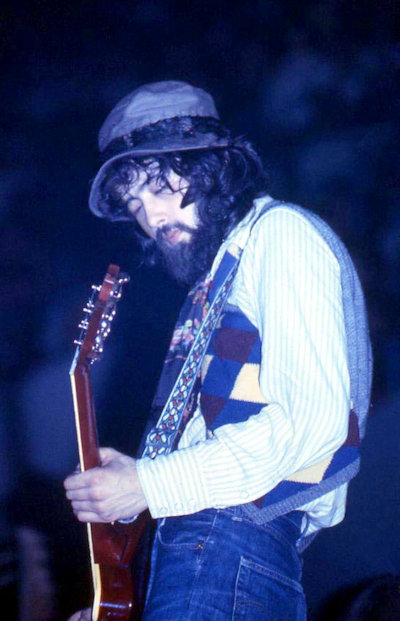
The Youngbloods were first up, offering a
laid-back, bluesy set that went far too
long as the crowd grew restless. Behind
the scenes, their manager wasn't letting
the band wrap up until payment was
received in full. With their hit song Vehicle
still on the charts, Chicago’s Ides of
March followed and were the surprise of
the night, turning in a high-energy
performance.
“I loved the jolt of the Ides of March,”
recalled Moe Hogue. “Talk about a band
being truly pumped up to play.”
George Belanger agrees. “They weren't
really a favourite band of mine, but I
thought they stole the show musically,
them and Iron Butterfly.”
As Ides of March drummer Mike Borch
remembers, “That night was unforgettable
for us. We were thrilled to be playing
with the likes of Zeppelin, Iron Butterfly
and the Youngbloods. Somehow we soared
that night and went places musically in
the jam sections that we hadn't been
before.” Amiable and energetic
guitarist/singer Jim Peterik, sporting
saddle shoes, was an instant fan
favourite.
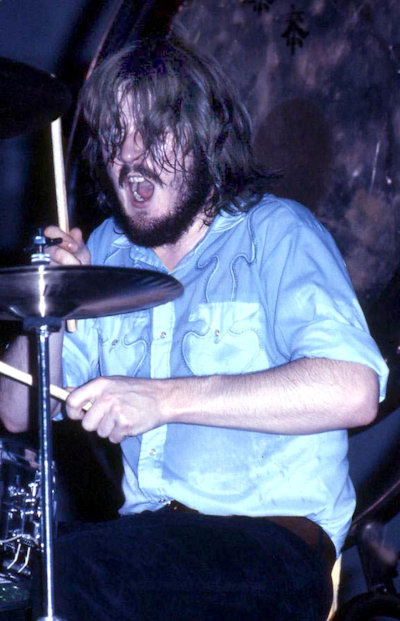
Next up, Iron Butterfly were true to their
name, pummelling the crowd with a heavy
metal, twin lead-guitar assault
culminating in the inevitable and
interminable In A Gadda Da Vida,
complete with lengthy drum solo.
Dennis (the Gear) Lind insists Butterfly
stole the show. “They were unbelievable.
They got standing ovations. They were the
best act there.”
Rumours circulated among the crowd about
whether Zeppelin would actually perform.
With a clause in their contract
stipulating that in the event of rain Led
Zeppelin would not be expected to perform
but would still be paid in full, the band
members, manager and crew were holed up at
the International Inn (now the Victoria
Inn by the airport), high (one assumes
quite literally) and dry. Steinkopf
appealed to their burly and belligerent
manager Peter Grant to appease the
rain-soaked crowd by performing, but he
remained intransigent.
 It took local singer Dianne
Heatherington exhorting the British band
to play that got them moving, insisting
they owed it to the crowd, and calling
them “a bunch of wimps.” Merry-Go-Round
keyboard player Hermann Frühm accompanied
Heatherington to the band’s room. It took local singer Dianne
Heatherington exhorting the British band
to play that got them moving, insisting
they owed it to the crowd, and calling
them “a bunch of wimps.” Merry-Go-Round
keyboard player Hermann Frühm accompanied
Heatherington to the band’s room.
“She shamed them into playing,” marvels
Frühm. “She told them, ‘All these people
are here to see you and you’re chickening
out?’ She spoke to them like they were her
little brothers or something. No fear
whatsoever.”
Grant
demanded the remainder of their fee be
paid first — along with several thousand
more dollars for the four-hour delay —
before his boys would appear. According to
local promoter and music journalist Bruce
Rathbone’s colourful eyewitness account,
“Maitland plunked US$25,000 cash in mixed
bills on the table in big stacks.” How he
came up with the cash late on a Saturday
night remains a mystery.
“Grant said, in a slurred thick British
accent, ‘Mr. Steinkopf, you are a
gentleman. We are ready to give the best
goddamn show we've ever played.’ “
It was well past midnight Sunday when
Zeppelin took the stage. Despite the
limitations of the PA system muddying
their overall sound and a lack of suitable
concert lighting for atmosphere, they
played a loose, stoned set with extended
guitar solos by Jimmy Page.
“It was obvious they were really enjoying
themselves, and they played forever,”
recalls Rathbone. “You could tell they
were all loaded, but who wasn't?”
While not their finest moment musically,
it was certainly among the band’s
best-received sets ever. One concertgoer
insists singer Robert Plant altered the
lyrics in Dazed and Confused from
“Tried to love you baby/but you pushed me
away” to “Saved all my money/gonna buy me
a new PA.” It had been a very long day,
and some in the crowd fell asleep during
the band’s set.
Led Zeppelin finally walked off the stage
at around 3 a.m., leaving the audience
both exhausted and satisfied.
Interviewed shortly afterwards back at
their hotel, Plant admitted, “It was hard
to get into it because of the sound, and
the building we were in wasn't too hot on
the acoustics, was it?” Added bass player
John Paul Jones, “I think you lot did a
pretty good job, what with all your groups
pitching in with all their equipment on
such short notice. I feel sorry for the
cats that lost all their sound system out
there in the rain. Their insurance company
is going to have a fit when they find out
what happened.”
“I was 15 at that time, and I was there,”
Jack Moore says of Man-Pop. “It was the
best, and I don’t think we will ever see
another one like it. Maitland Steinkopf
will never be forgotten because of this
event.”
Many would agree.
With thanks to Bruce Rathbone.
HIGH AND DRY
Rained-out 1970 rock show shifted from
stadium to arena
By: John Einarson
As published in the Winnipeg Free Press August 30,
2015
|


